
Can I Pour Hot Tea into a Glass Pitcher?
Views: 5251 Author: Site Editor Publish Time: 2026-03-04 Origin: Site


Some people are skeptical about using glass pitchers to hold boiling water and hot drinks (such as coffee or tea). This skepticism is not unfounded, as many of us have experienced glass breaking after pouring hot drinks into it. However, this is not always the case.
Always use a heat-resistant borosilicate glass pitcher when serving hot drinks.
I'll walk you through everything you need to know about safely pouring hot tea into glass pitchers, the science behind glass safety, and the best practices for protecting your pitcher and yourself from potential accidents.
Understanding Glass and Heat: The Science Behind It

What Happens When You Heat Glass?
To answer whether you can pour hot tea into a glass pitcher, we first need to understand how glass reacts to heat. Glass is a material composed primarily of silica, and its molecular structure behaves predictably when exposed to temperature changes.
The Physics of Glass and Heat:
- Glass expands when heated
- Glass contracts when cooled
- Different types of glass expand at different rates
- Rapid temperature changes create stress on glass
- This stress can lead to cracking or shattering
This phenomenon, known as thermal shock, is the primary concern when pouring hot liquids into glass containers. Understanding thermal shock is crucial for safely using glass pitchers for hot beverages.
Types of Glass: Not All Glass is Created Equal
The first and most important factor in determining whether you can safely pour hot tea into a glass pitcher is identifying what type of glass you're using.

Common Glass Types:
1. Borosilicate Glass
Borosilicate glass is the gold standard for heat resistance. It contains boron oxide, which significantly reduces the coefficient of thermal expansion, making it highly resistant to thermal shock.
- Can withstand temperatures up to 400°F (200°C)
- Resists rapid temperature changes
- Used in laboratory equipment and quality teapots
- Most suitable for hot beverages
- Typically more expensive than standard glass
2. Soda-Lime Glass
This is the most common type of glass used for everyday items like drinking glasses and regular pitchers.
- Cannot handle extreme temperature changes
- Suitable for room-temperature beverages
- Breaks easily under thermal stress
- Not recommended for hot liquids
- Found in most household glassware
3. Tempered Glass
Tempered glass is treated through heating and rapid cooling processes.
- Stronger than regular glass
- More resistant to thermal shock
- Often used for baking dishes
- Better than standard glass but not ideal for hot tea
- Still requires careful temperature management
4. Crystal glass
While crystal glass is beautiful, it is not suitable for holding hot drinks.
- Very sensitive to thermal shock
- Can release lead when exposed to heat
- Best used for decorative purposes
- Should never hold hot liquids
- Expensive and requires special care

Can You Pour Hot Tea into a Glass Pitcher?
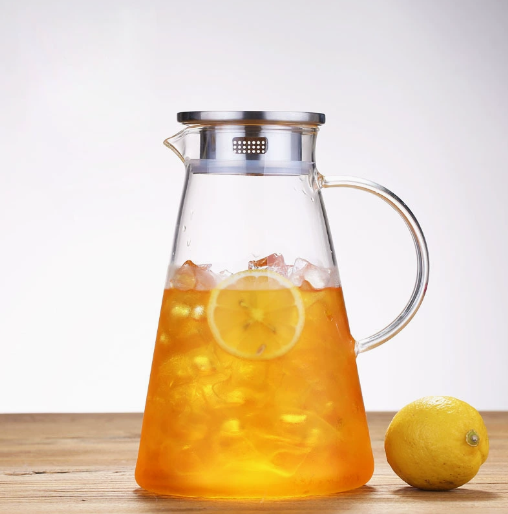
Yes, Yes, it needs to be made of high borosilicate glass glass pitcher
You can pour hot tea into a glass pitcher, but the safety depends entirely on the type of glass, the temperature of the tea, and how you execute the process. Using borosilicate glass with proper technique is safe, while pouring hot tea into standard soda-lime glass pitchers can be risky.
Safe Scenario:
- Borosilicate glass pitcher
- Tea at standard serving temperature (160-180°F or 70-80°C)
- Proper preheating technique
- Gradual pouring method
Unsafe Scenario:
- Regular soda-lime glass pitcher
- Boiling water (212°F or 100°C) poured directly
- No preheating
- Sudden temperature change
Safe Methods for Pouring Hot Tea into Glass Pitchers
Method 1: The Preheating Technique (Most Recommended)
Preheating your glass pitcher is the single most important step in safely pouring hot tea into glass.
Step-by-Step Process:
1. Fill the pitcher with warm water - Start by adding hot (not boiling) water to the glass pitcher
2. Let it sit for 30-60 seconds - This allows the glass to gradually warm up
3. Swirl the water around - Ensure all interior surfaces contact the warm water
4. Empty the pitcher carefully - Pour out the warm water
5. Pour the hot tea immediately - While the glass is still warm from preheating
6. Pour slowly and steadily - Don't rush the process
This method dramatically reduces thermal shock because the glass has already begun adjusting to heat before the hot tea arrives.
Why This Works:
- Minimizes temperature differential
- Allows gradual molecular adjustment
- Reduces internal stress on glass
- Prevents sudden cracking
- Takes only one minute of preparation time
Method 2: The Gradual Temperature Increase Method
For extra caution, you can employ a more gradual approach.
Process:
1. Start with room temperature water - Fill the pitcherwith cool water
2. Add small amounts of hot tea gradually - Start with 25% hot tea, 75% room temperature water
3. Wait 30 seconds - Allow the temperature to stabilize
4. Increase the proportion of hot tea - Move to 50/50 hot tea and cool water
5. Add more hot tea - Progress to 75% hot tea
6. Finally pour pure hot tea - Once temperature is stable
This method takes longer but provides maximum safety for valuable or antique glass pitchers.
Method 3: The Insulated Barrier Method
Use a specialized glass pitcher designed for hot beverages or add a barrier between the heat source and glass.
Techniques:
- Use a metal or wooden trivet
- Place the pitcher on a heat-resistant surface
- Use double-walled glass pitchers specifically designed for heat
- Add a metal infuser or strainer to distribute heat evenly
Important Safety Precautions
Temperature Considerations
The temperature of your tea matters significantly when pouring into glass.
Ideal Temperature Ranges:
- Black tea: 160-180°F (70-80°C) when pouring
- Green tea: 140-160°F (60-70°C) when pouring
- White tea: 140-160°F (60-70°C) when pouring
- Oolong tea: 160-180°F (70-80°C) when pouring
- Herbal tea: 180-212°F (80-100°C) when pouring
Notice that even herbal tea, which can tolerate boiling water, should cool slightly before pouring into glass. Standard pouring temperatures are typically 20-30 degrees below boiling point, which is safer for glass.
Glass Pitcher Inspection
Before pouring hot tea into any glass pitcher, inspect it carefully.
What to Check:
- Cracks or chips - These weaken the structural integrity
- Previous stress marks - Visible lines indicate previous thermal stress
- Thickness uniformity - Thicker glass generally handles heat better
- Quality of construction - Seamless, well-made pitchers are safer
- Age of the pitcher - Older glass may be more brittle
Discard any pitcher showing these signs, as they're more likely to break under heat stress.

Handling and Pouring Technique
Your technique matters as much as the glass type.
Best Practices:
1. Use both hands - Stabilize the pitcher with both hands for control
2. Pour slowly - Fast pouring creates turbulence and heat distribution issues
3. Avoid sudden movements - Keep the pitcher level and stable
4. Don't pour to the brim - Leave at least one inch of space at the top
5. Keep hands away from the rim - Steam can burn you
6. Use a heat-resistant cloth - Wrap the handle with a towel for extra protection
7. Pour in one smooth motion - Avoid stopping and starting repeatedly
Recognizing Warning Signs of Danger
Certain signs indicate your glass pitcher may be at risk of failure.
Warning Signals:
- Sudden cracks appearing - This means thermal stress is building
- Unusual sounds - Cracking or popping sounds indicate stress
- Glass becoming cloudy - This may indicate micro-fractures
- Visible stress lines - Hairline cracks are precursors to larger breaks
- Uneven heating - One side feels significantly hotter than another
If you notice any of these signs, stop using the pitcher immediately and dispose of it safely.
Best Glass Pitchers for Hot Tea
Top Features to Look For
When purchasing a glass pitcher specifically for hot tea service:
1. Material: Borosilicate Glass
- Specifically labeled as "borosilicate" or "heat-resistant glass"
- Designed to withstand high temperatures
- More expensive but worth the investment
2. Thickness
- Thicker glass (4-5mm) handles heat better than thin glass
- Look for substantial, quality construction
- Heavier pitchers usually indicate better quality
3. Design Features
- Heat-resistant handles (preferably wrapped or double-layered)
- Spout design that prevents splashing
- Lid that allows steam to escape
- Smooth interior for easy cleaning
Recommended Pitcher Types
Borosilicate Measuring Jugs: Originally designed for laboratories, these are excellent for hot tea because they're meant to withstand temperature changes.
Professional Tea Service Pitchers: Specifically designed for hot beverages, these often feature improved heat distribution and safety features.
Double-Walled Glass Pitchers: These specialty pitchers have an insulating air gap that protects the outer glass while keeping tea hot.
Frequently Asked Questions
How do I know if my glass pitcher is borosilicate?
Check the manufacturer's label or product description. If it doesn't specifically say "borosilicate" or "heat-resistant glass," assume it's standard soda-lime glass and not suitable for hot beverages.
Is it safe to pour hot tea into a glass pitcher, then put it in the refrigerator?
No. This extreme temperature change can cause thermal shock. Always allow the pitcher to cool to room temperature first, ideally over 15-20 minutes.
How long should I preheat the pitcher?
Thirty to sixty seconds of warm water is typically sufficient. Longer preheating doesn't provide additional benefits.
glass pitcher High borosilicate glass Borosilicate glass cup Can I Pour Hot Tea into a Glass Pitcher Is it safe to put hot tea in glass? Can I pour boiling water into a glass pitcher? Can you steep tea in a glass pitcher? glass pitcher factory Glass Pitcher manufacturer Can you pour tea into a glass?


